If you’ve ever stood in an auto parts store staring at rows of brightly colored coolant bottles, you’re not alone. With engines running hotter and lasting longer than ever, choosing the right coolant has become more important — and more confusing. The debate around OAT vs HOAT vs IAT is trending for a reason: using the wrong coolant can shorten your engine’s life.
Let’s break it down in simple terms so you can confidently choose what’s best for your vehicle.
Why Coolant Matters More Than Ever
Modern engines are built with tighter tolerances, aluminum components, turbochargers, and advanced cooling systems. Automakers like Toyota, Ford, and BMW engineer their engines to operate efficiently at high temperatures. Coolant doesn’t just prevent freezing — it prevents overheating, corrosion, scale buildup, and internal engine damage.
At its core, coolant (antifreeze) is typically made from ethylene glycol or propylene glycol mixed with water. What separates OAT, HOAT, and IAT is the additive package designed to protect engine metals.
IAT (Inorganic Additive Technology)
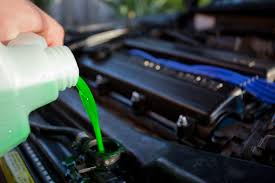
Best known as the “traditional green coolant.”
IAT coolant uses inorganic salts like silicates and phosphates to prevent corrosion. It was the industry standard for decades and is commonly found in older vehicles (typically pre-2000 models).
Pros:
- Affordable
- Effective corrosion protection for older engines
- Works well with copper and brass radiators
Cons:
- Shorter lifespan (usually 2 years or 30,000 miles)
- Additives deplete quickly
- Not ideal for modern aluminum engines
If you drive an older vehicle, IAT may still be the correct choice — but it requires more frequent changes.
OAT (Organic Acid Technology)
The long-life modern formula.
OAT coolant uses organic acids instead of traditional silicates and phosphates. It’s commonly orange, red, or purple in color, though color alone should never determine compatibility.
General Motors popularized OAT coolant with their Dex-Cool formula.
Pros:
- Extended lifespan (up to 5 years or 150,000 miles)
- Better protection for aluminum components
- Reduced scale buildup
Cons:
- Can cause gasket issues if contaminated
- Not backward-compatible with some older systems
OAT is widely used in modern vehicles and is ideal for drivers looking for lower maintenance intervals.
HOAT (Hybrid Organic Acid Technology)
The best of both worlds.
HOAT combines organic acids (like OAT) with small amounts of inorganic additives (like IAT). This hybrid approach provides enhanced corrosion protection while maintaining extended service life.
Chrysler and Mercedes-Benz commonly use HOAT formulations.
Pros:
- Long lifespan (around 5 years)
- Excellent multi-metal protection
- Improved compatibility in mixed-metal systems
Cons:
- Mixing with the wrong coolant can reduce effectiveness
- Slightly more expensive
HOAT is especially common in European and some American vehicles.
The Biggest Mistake: Mixing Coolants
One of the most common and costly mistakes is mixing different coolant types. Combining IAT with OAT or HOAT can cause sludge formation, clog radiators, and reduce corrosion protection. Even if colors look similar, the chemical formulas may not be compatible.
Always check:
- Your owner’s manual
- The manufacturer’s specification
- The coolant label for compatibility
When in doubt, flush the system completely before switching types.
Which Coolant Should You Choose?
The answer isn’t about which is “best” — it’s about what your vehicle manufacturer recommends.
- Older vehicles (pre-2000): Likely IAT
- Most modern vehicles: Typically OAT
- Many European or select American models: Often HOAT
Using the correct coolant ensures optimal heat transfer, corrosion protection, and long-term reliability.
Why This Matters Today
With more turbocharged engines and hybrid vehicles on the road, cooling systems are under greater stress than ever. Proper coolant choice plays a critical role in maintaining performance and preventing costly repairs.
Today’s engines are more efficient — but also less forgiving. A simple coolant mistake can lead to overheating, water pump failure, or head gasket damage.
ALSO READ
Final Takeaway
IAT, OAT, and HOAT all serve the same core purpose — protecting your engine — but they do it in different ways. The right choice depends entirely on your vehicle’s design.
Follow manufacturer guidelines, avoid mixing formulas, and stick to recommended service intervals. Choosing the correct coolant may seem minor, but it’s one of the easiest ways to protect your engine and extend its life.
When it comes to cooling systems, knowledge truly is power — and prevention is far cheaper than repair.For more expert-driven automotive maintenance insights, stay tuned to LARWHEELS.com, where practical knowledge keeps your vehicle performing at its best.