The Garage Giants: Inspiring Mat Armstrong vs 2025 Bugatti’s Mate Rimac — Can a Supercar Be Rebuilt Outside the Factory?

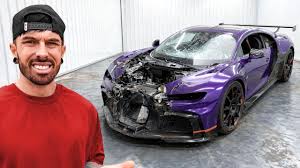
In the world of high-performance hypercars and YouTube mechanics, few stories in early 2026 have captured the automotive community’s attention like the ongoing saga between Mat Armstrong and Bugatti CEO Mate Rimac.
Armstrong is a British automotive YouTuber known for buying crash-damaged supercars and rebuilding them in his own workshop. Over the years, he has restored everything from Lamborghinis to Ferraris, turning complex mechanical challenges into highly engaging video content. His hands-on style and willingness to take on “unfixable” cars have earned him millions of followers.
His most ambitious project yet, however, has taken things to another level: rebuilding a heavily damaged Bugatti Chiron Pur Sport.
The Chiron Pur Sport: Engineering at Its Extreme
The Bugatti Chiron Pur Sport is one of the most advanced production cars in the world. Powered by an 8.0-liter quad-turbocharged W16 engine producing over 1,500 horsepower, it represents the pinnacle of combustion-engine engineering. With extreme aerodynamics, a carbon-fiber monocoque chassis, and highly specialized components, it is designed to perform safely at speeds exceeding 400 km/h.
Armstrong purchased a wrecked example that had previously been written off by insurers. His plan was bold: rebuild the hypercar independently at a fraction of the official repair cost while documenting the entire journey online.
What seemed like another ambitious rebuild quickly became a global talking point.
Bugatti Parts Refusal Controversy
When Armstrong attempted to source genuine Bugatti parts through official channels, he was reportedly denied. The vehicle’s VIN was effectively restricted from receiving factory support, meaning authorized dealers would not supply components for the independent rebuild.
Mate Rimac, CEO of Bugatti Rimac, publicly addressed the situation. He emphasized that repairing such a complex hypercar requires specialized factory tools, procedures, and safety checks. According to Rimac, allowing unofficial repairs on a vehicle capable of extreme speeds raises serious safety concerns.
He also suggested that if the car were to be properly restored, it should be sent back to Bugatti’s factory in Molsheim, France, where trained technicians and engineering teams could ensure structural integrity and correct calibration.
At the core of Bugatti’s position is risk management. The Chiron’s carbon structure, drivetrain alignment, and electronic systems are deeply integrated. Even small miscalculations could compromise safety at high speeds.
Mat Armstrong Pushes Forward
Despite the refusal, Armstrong has continued the rebuild process. His videos show the car being carefully dismantled, with damaged components identified and structural sections separated for inspection. He has expressed frustration over the lack of parts access but maintains that he wants to prove the rebuild can be done responsibly.
Supporters argue that independent specialists rebuild complex vehicles every day and that ownership should include the right to repair. Critics counter that hypercars operating at extreme performance levels are a different category entirely.
The controversy has only amplified public interest. Each new video update draws massive viewership, and debates across automotive forums continue to grow.
A Bigger Conversation: Right to Repair vs Manufacturer Control
Beyond the personalities involved, this situation highlights a broader issue within the automotive industry: the balance between manufacturer control and independent repair rights.
As vehicles become more technologically advanced, automakers are tightening control over parts distribution, diagnostics, and repair procedures. For brands like Bugatti, where engineering tolerances are razor-thin and performance limits are extreme, that control is seen as essential.
At the same time, creators like Armstrong represent a new wave of automotive culture — one driven by transparency, hands-on experimentation, and digital storytelling. Millions of viewers are learning how these cars are built, dismantled, and potentially rebuilt outside factory walls.
ALSO READ
What Happens Next?
Whether Armstrong ultimately succeeds in fully restoring the Chiron Pur Sport without factory backing remains uncertain. The technical hurdles are enormous, and sourcing components may prove to be the greatest challenge of all.
What is certain, however, is that this story has become more than just a car rebuild. It is now a defining moment in the conversation about ownership, innovation, and the future of automotive repair in the hypercar era.
For now, the world is watching — one episode at a time.

One Comment