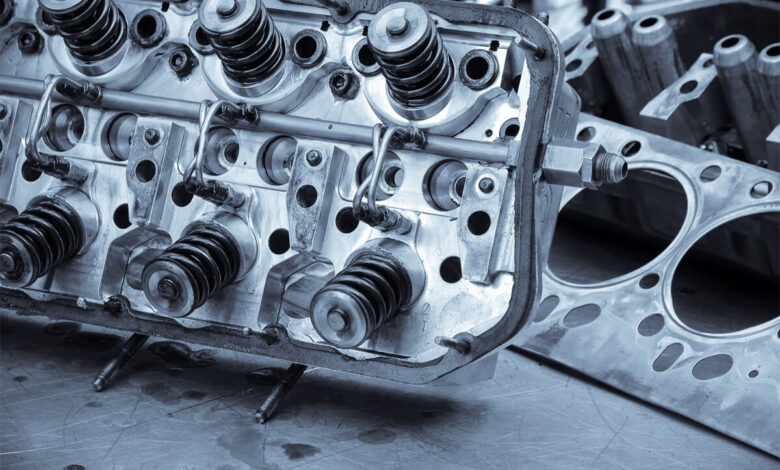
When it comes to preventing leaks in your engine, transmission, or cooling system, the debate between automotive sealants and traditional gaskets is more relevant than ever. Modern engines run hotter, operate under higher pressure, and use lighter materials than older vehicles. That means choosing the right sealing method is critical for reliability and long-term performance.
So, should you use a gasket, a sealant, or both? Let’s break it down in practical terms.
What Is a Gasket?
A gasket is a pre-formed mechanical seal placed between two mating surfaces to prevent leaks. They’re typically made from rubber, cork, metal, graphite, or composite materials. You’ll find them in areas like:
- Cylinder heads
- Oil pans
- Intake manifolds
- Valve covers
- Water pumps
Modern vehicles often use multi-layer steel (MLS) head gaskets designed to handle high compression and temperature.
Advantages of Gaskets:
- Precise thickness for consistent spacing
- Reliable under high pressure
- Cleaner installation when surfaces are properly prepared
- Designed specifically for the application
Limitations:
- Can fail if surfaces are warped
- May degrade over time
- Often require replacement during disassembly
What Is an Automotive Sealant?
Automotive sealants are liquid or paste compounds that cure to form a flexible or rigid seal. Common types include:
- RTV silicone
- Anaerobic gasket makers
- Thread sealants
- Form-in-place gasket (FIPG) compounds
Instead of inserting a physical gasket, you apply the sealant directly onto the mating surface.
Advantages of Sealants:
- Excellent for irregular or slightly warped surfaces
- Can replace certain traditional gaskets
- Strong resistance to vibration
- Ideal for custom or tight-fit applications
Limitations:
- Requires precise application
- Over-application can clog oil passages
- Cure time varies
- Not suitable for every high-pressure environment
Key Differences That Matter
| Feature | Gaskets | Sealants |
|---|---|---|
| Installation | Pre-cut, ready to install | Applied manually |
| Reusability | Generally no | No |
| Thickness Control | Fixed | Variable |
| Best For | High-pressure seals | Surface imperfections |
| Risk Factor | Blowout if damaged | Improper curing or excess |
When Should You Use a Gasket?
Use a gasket when:
- The manufacturer specifies it
- The joint requires exact spacing
- The system handles high combustion pressure
- The part is designed with a gasket groove
For example, cylinder head assemblies almost always require a specific engineered gasket. Ignoring manufacturer specifications can lead to compression loss or coolant mixing with oil.
When Should You Use a Sealant?
Sealants work best when:
- Sealing oil pans or timing covers
- Surfaces are slightly uneven
- You’re repairing minor leaks
- The manufacturer recommends RTV at specific points
Many modern engines now use form-in-place gasket systems instead of traditional paper gaskets, especially for oil pans and valve covers.
Can You Use Both?
Yes, and in many cases, you should.
Manufacturers often recommend applying small amounts of RTV sealant at gasket corners or junction points where multiple surfaces meet. This reinforces potential weak spots and prevents leaks.
However, applying sealant over an entire gasket unless specified can cause improper torque distribution and failure. Always follow torque specs and curing times.
ALSO READ
Why Modern Engines Favor Sealants
Newer engines are designed with tighter tolerances and lighter materials like aluminum. Sealants provide flexibility that accommodates thermal expansion better than some traditional gasket materials. Additionally, automated manufacturing processes make liquid gasket systems more efficient during assembly.
That said, traditional gaskets remain essential in high-compression and safety-critical areas.
The Bottom Line
Choosing between automotive sealants and gaskets isn’t about which is better. It’s about using the right tool for the job.
- For high-pressure, precision-sealed systems use engineered gaskets.
- For flexible sealing and surface irregularities use high-quality sealants.
- When specified use both correctly.
If your goal is reliability, leak prevention, and long-term engine health, always consult your service manual and follow torque procedures carefully. Proper sealing isn’t just about stopping leaks. It’s about protecting your engine’s performance and longevity.
For more expert-driven automotive maintenance insights, stay tuned to LARWHEELS.com, where practical knowledge keeps your vehicle performing at its best.